 Login


How to Choose the Right Leather for Your Furniture
August 01, 2025Choosing leather furniture is about more than finding the right colour or sofa design. The type of leather, surface finish, texture, durability and maintenance requirements can all influence how a sofa looks, feels and ages over time.
From a classic leather Chesterfield sofa to a clean-lined contemporary couch or an executive leather chair, the right upholstery should complement both the furniture design and the way you intend to use it.
Natural leather is valued for its distinctive grain, tactile character and ability to develop personality with use. But not every leather is processed or finished in the same way. Understanding those differences can help you choose premium leather furniture that suits your home, comfort preferences and lifestyle.
Why Choosing the Right Leather Matters
A sofa is one of the most frequently used pieces of furniture in a home. The leather covering it affects much more than appearance.
It influences how soft the furniture feels, how easily the surface can be maintained, how visible natural markings are and how the material changes with age.
Some homeowners prefer leather with highly visible grain and natural variation. Others need a more protected surface for a busy family living room. Neither choice is automatically better—the right leather depends on where and how the furniture will be used.
This is why choosing a leather sofa should begin with understanding the material rather than selecting purely by colour.
Leather Grade and Leather Finish Are Not the Same Thing
One of the most important things to understand when shopping for leather furniture is the difference between the leather's grain structure and its surface finish.
Terms such as full-grain leather and corrected-grain leather generally describe what has been done to the natural grain surface.
Terms such as aniline, semi-aniline and pigmented leather describe how the leather has been coloured and finished.
That means aniline leather should not simply be treated as another step in a basic "leather quality ranking." Different combinations of grain and finishing can be selected depending on the appearance, feel and performance required from the furniture. Industry guidance similarly distinguishes these finished leather types based on how much of the natural surface remains visible and how much protective pigment is applied.
Full-Grain Leather: Natural Character at Its Finest
Full-grain leather retains the natural grain surface rather than having it heavily altered to remove natural characteristics.
Because the surface remains comparatively untouched, variations in grain, texture and natural markings can remain visible. These variations are part of what gives genuine natural leather its individuality.
Full-grain leather can be an excellent choice if you appreciate:
natural texture and character, a surface that develops personality over time, distinctive variation from hide to hide, and furniture that does not need to look perfectly uniform.
It is particularly well suited to furniture designs where the leather itself is intended to become an important visual element.
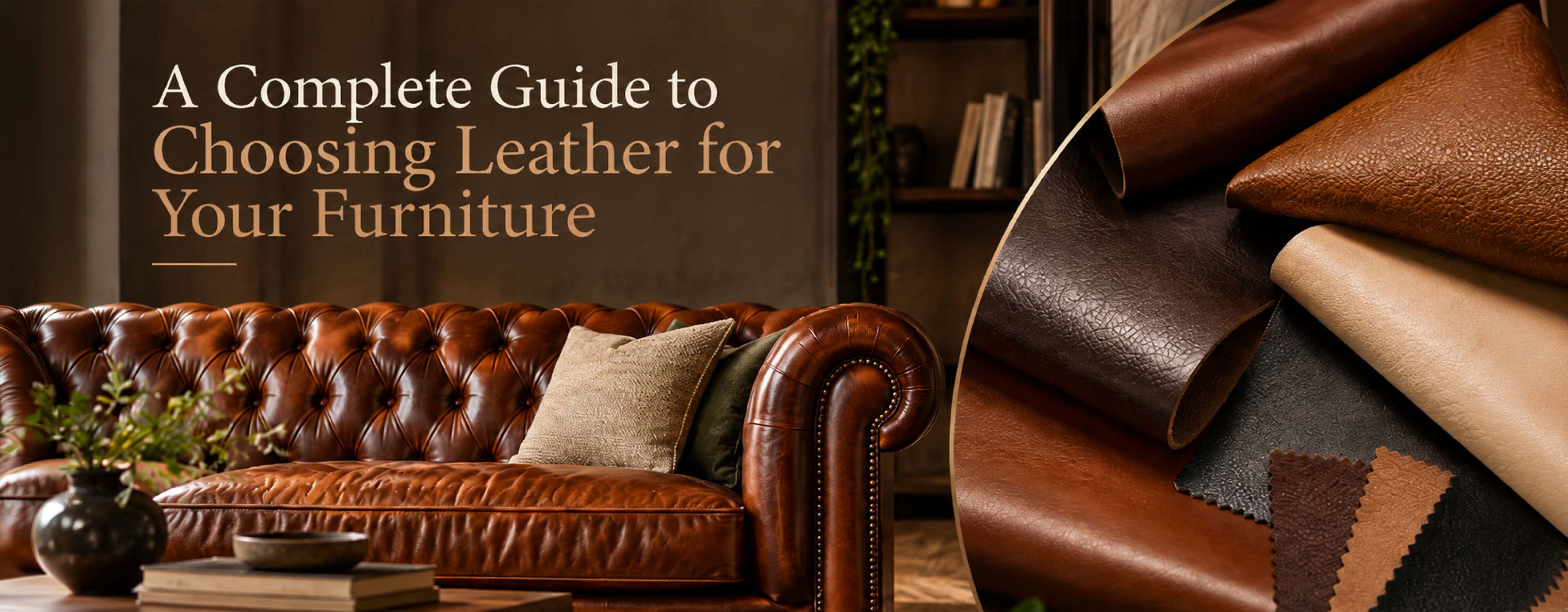
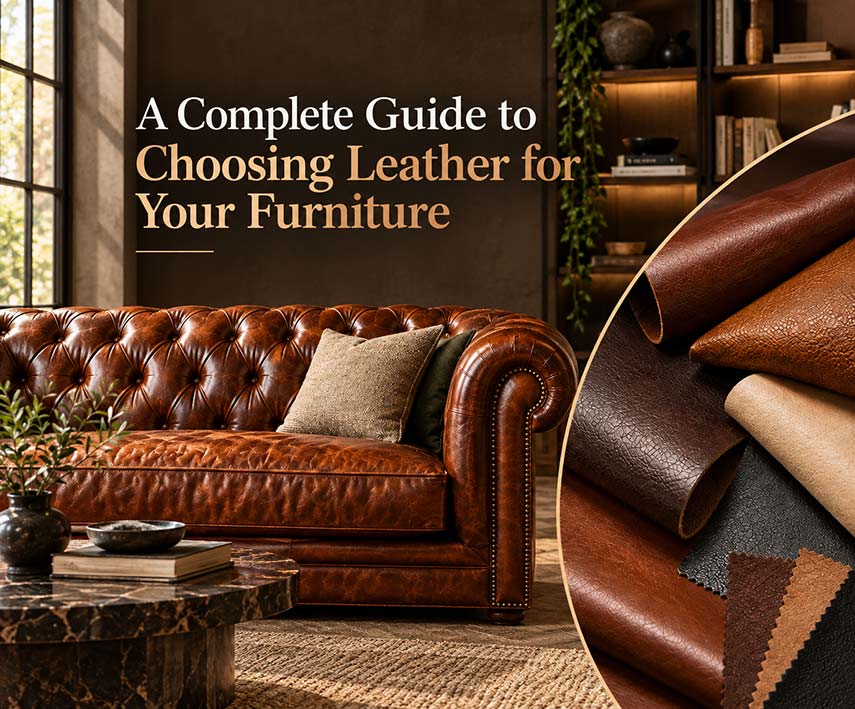
A richly upholstered Chesterfield leather sofa, for example, can use the character of natural leather alongside deep button tufting and rolled arms to create a strong, timeless presence. Attrarre's Chesterfield range follows this classic design language across several leather sofa styles.
What Is Top-Grain Leather?
The term top-grain leather refers broadly to leather made from the upper section of the hide. Depending on the final product, its surface may be treated or corrected to achieve greater consistency.
This can make it suitable for customers who want the benefits and feel of real leather while preferring a cleaner, more uniform appearance.
When comparing full-grain and other top-grain leathers, don't look at the name alone. Ask about the actual finish applied to the surface, because that can significantly affect feel, maintenance and resistance to everyday wear.
Aniline Leather: For a Natural Look and Feel
Aniline leather receives minimal surface finishing, allowing much of the original natural grain to remain visible.
The result is a tactile, natural-looking leather with considerable variation and character. Because the surface has less protective coating, it can also be more susceptible to marks and staining than more heavily protected leather.
Aniline leather is therefore particularly attractive to homeowners who value the authentic appearance of the material and are comfortable with leather developing visible character as it is used.
Rather than expecting every section to look perfectly identical, buyers of natural aniline leather often appreciate the subtle differences that make each upholstered piece distinctive.
Semi-Aniline Leather: Natural Character With Added Protection
For many residential interiors, semi-aniline leather provides an appealing balance between natural appearance and practical everyday use.
A small amount of pigment or protective finish is applied while the underlying leather grain can still remain visible. This creates greater colour consistency and additional surface protection without completely hiding the character of the material.
Semi-aniline leather can be worth considering when you want:
the appearance of natural leather, a soft and premium surface feel, greater consistency across a sofa, and somewhat more protection for everyday living.
For households where the sofa will be used frequently, this balance can make semi-aniline upholstery particularly practical.
Pigmented Leather: Designed for Greater Surface Protection
Pigmented leather has a more substantial protective surface coating.
Because pigments cover more of the natural surface, the appearance tends to be more consistent and the original pores may be less visible. The additional finish can also provide stronger resistance to everyday surface wear.
This type of leather may be appropriate for high-use seating where ease of care and visual consistency are more important than displaying every natural characteristic of the hide.
That makes the choice between aniline, semi-aniline and pigmented leather less about asking "Which one is best?" and more about asking:
"Which finish is best for the way I will use this furniture?"
What About Bonded Leather?
Bonded leather should not be confused with a natural leather hide used as a continuous upholstery surface.
It is produced using leather fibres, dust, clippings or shavings combined with a binding material, which is often synthetic.
For customers investing in long-term furniture, understanding this distinction is particularly important. Descriptions such as real leather sofa, natural leather sofa, full-grain leather furniture and bonded leather furniture can refer to materially different products.
Always ask the seller exactly what material is being used rather than relying solely on the word "leather."
Which Leather Is Best for a Sofa?
There isn't one universal answer.
The right choice depends on the type of living space and your priorities.
|
Your Priority |
Leather Direction to Consider |
|---|---|
|
Highly natural appearance |
Aniline / minimally finished leather |
|
Natural feel with added protection |
Semi-aniline leather |
|
Consistent appearance and practical maintenance |
More protected or pigmented leather |
|
Visible grain and natural character |
Full-grain leather |
|
Frequently used family seating |
A durable, appropriately protected upholstery leather |
|
Statement furniture |
Character-rich natural leather selected to complement the design |
Even within a particular category, leather can vary in thickness, finish, grain, softness and performance. The furniture's construction and craftsmanship matter alongside the upholstery itself.
Match the Leather to Your Lifestyle
Before buying a premium leather sofa, think about how the furniture will actually be used.
A formal lounge that is used occasionally has very different requirements from a family living room used every day.
Homes with children, frequent guests or pets may benefit from a more protected leather surface. A quieter space can accommodate more natural finishes where subtle marks and gradual patina are welcomed as part of the material's ageing process.
Similarly, a contemporary apartment may suit smooth, restrained leather upholstery, while a traditional interior may benefit from richer grain and classic tufted detailing.
Attrarre's current furniture range reflects this difference in design language, spanning classic Chesterfield pieces, contemporary Urban sofas, recliners, lounge chairs and executive seating.
Consider the Colour and Texture of Leather Furniture
Leather colour can dramatically change the visual weight of furniture.
Brown, tan and cognac tones tend to highlight warmth and natural character. Black leather can create a stronger architectural presence, while lighter neutral tones can make substantial furniture appear visually softer.
Texture matters just as much.
A heavily grained leather creates a different impression from a smooth, refined surface. Before finalising the colour, consider how the texture interacts with the sofa's proportions, stitching, tufting, arm design and surrounding materials such as wood, stone and metal.
For this reason, choosing leather upholstery should ideally be done together with choosing the furniture design—not as a separate decision afterwards.
Look Beyond the Leather: Furniture Construction Matters Too
Premium leather alone does not automatically create premium furniture.
The overall quality of a leather sofa also depends on its frame, cushioning, suspension, stitching, upholstery workmanship and structural detailing.
Look closely at how seams align, how leather wraps around corners, how tufting is executed and how consistently the upholstery follows the shape of the furniture.
Leather and craftsmanship should work together.
A beautiful hide cannot compensate for weak furniture construction, just as excellent construction deserves upholstery that complements its quality.
How to Care for Leather Furniture
Correct maintenance helps preserve both the appearance and performance of leather.
Regularly remove surface dust with a soft cloth and deal with spills promptly by blotting rather than aggressively rubbing the surface. Avoid harsh cleaning chemicals unless they are specifically suitable for the leather finish.
Leather-care products should also be tested on a discreet area before being used across the entire piece. Industry care guidance recommends using products specifically intended for leather and allowing wet leather to dry naturally rather than exposing it to artificial heat or direct sunlight.
Attrarre also provides dedicated furniture care guidance covering cleaning, upholstery maintenance, spills, surface protection and professional care where required.
Questions to Ask Before Buying Leather Furniture
When comparing leather sofas or chairs, don't hesitate to ask exactly what you're buying.
Ask about the leather type and finish, whether the natural grain has been retained or corrected, how much protection the surface carries, what maintenance is recommended, and whether the chosen leather is suitable for the expected level of daily use.
Those answers tell you far more than a generic label such as "premium leather."
A knowledgeable furniture specialist should be able to explain not only how the leather looks on the day you buy it, but also how it is expected to perform and change over time.
Choose Leather That Fits the Way You Live
The right leather furniture should become more personal with time-not simply fill a space.
Full-grain leather appeals to people who appreciate natural individuality. Aniline finishes emphasise authentic grain and tactile character. Semi-aniline leather combines much of that natural appearance with additional protection, while more heavily pigmented finishes can provide greater consistency for demanding everyday environments.
The best choice depends on your home, your lifestyle and how you want your furniture to age.
At Attrarre Living, furniture is designed around comfort, character and thoughtful detailing, with collections ranging from classic Chesterfields to contemporary leather sofas, recliners and statement chairs. The result is a choice that goes beyond selecting a sofa style-it is about finding furniture and leather that feel right for the way you live.