 Login


Choosing Performance Leather for Commercial Spaces
September 10, 2025Furniture in a commercial environment works differently from furniture in a private home.
Office lounges, reception areas, meeting rooms and other professional spaces may experience frequent daily use while still needing to maintain a refined appearance. For these environments, selecting leather should involve more than simply choosing a colour or texture.
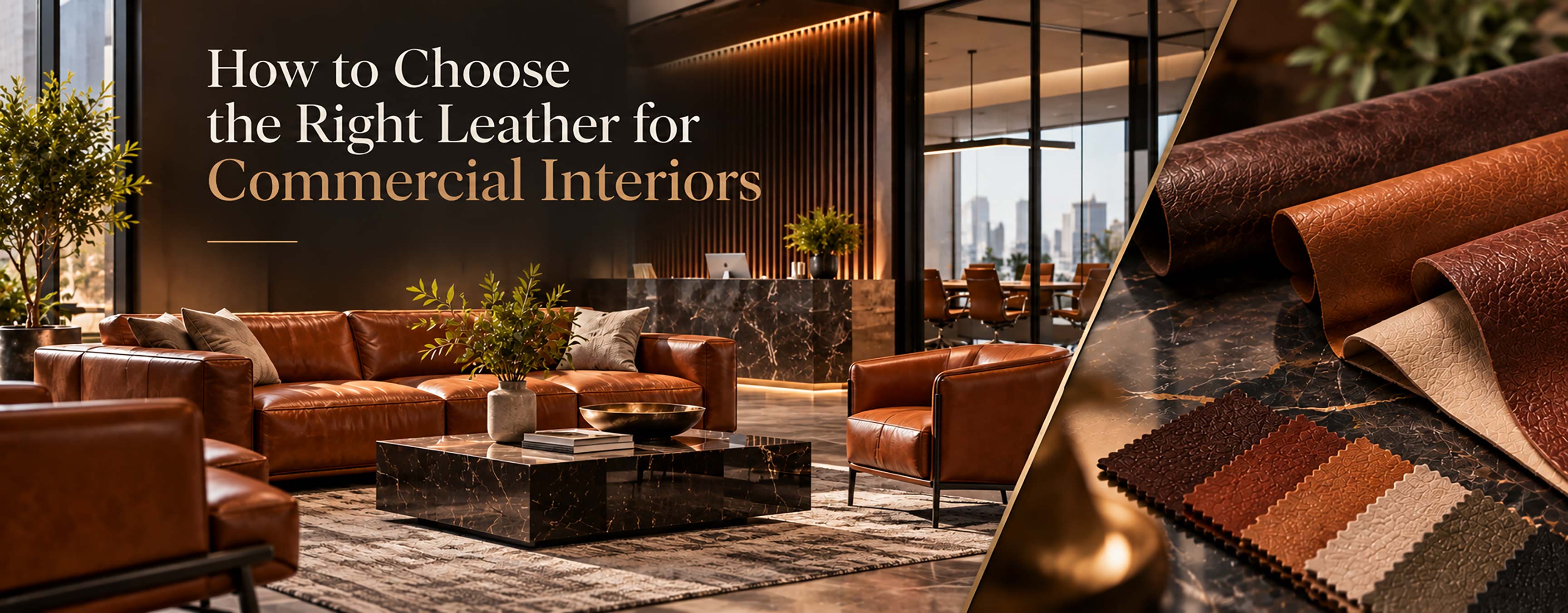
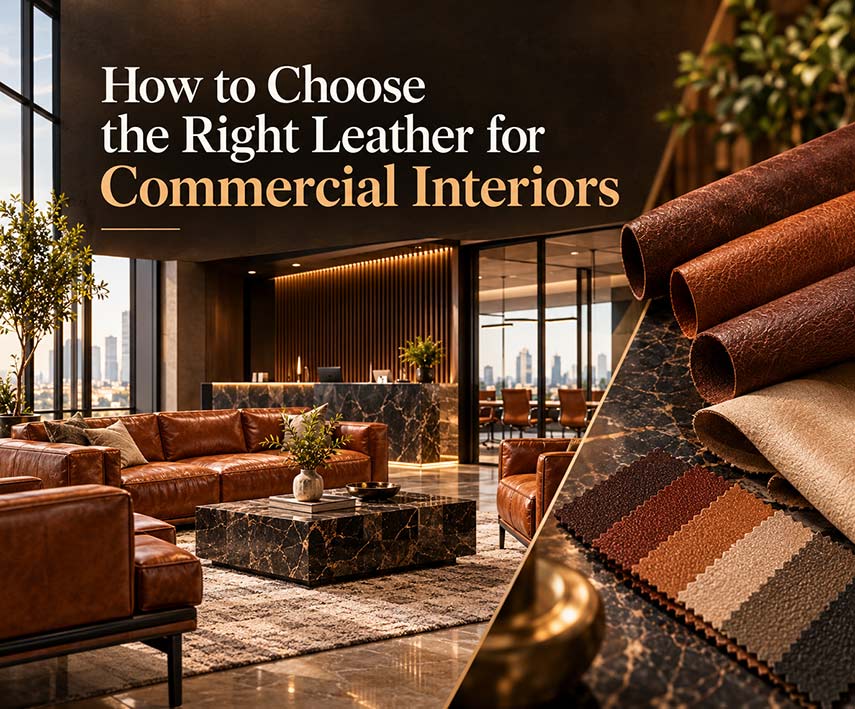
Performance leather for commercial spaces needs to bring together durability, comfort, appearance and suitability for the intended application.
Understanding what to consider before choosing leather can help create commercial furniture that performs effectively while complementing the overall interior.
What Is Performance Leather?
Performance leather refers to leather developed with the requirements of its final application in mind.
Within the Indian leather industry, performance upholstery leather is produced for demanding applications including furniture, architecture and automotive interiors. For commercial furniture, this means the leather is selected and developed to meet the requirements expected from frequently used seating and interior applications.
Performance should therefore not be understood as one particular leather colour, animal hide or visual finish.
It is about whether the leather is appropriate for the environment in which the finished furniture will be used.
Why Leather Selection Matters in Commercial Interiors
Commercial furniture often needs to balance several requirements at the same time.
It needs to look suitable for the space.
It needs to provide comfort.
It needs to perform under the expected level of use.
And its leather finish should support the overall design without becoming difficult to maintain.
This makes the intended application an important starting point.
A statement chair inside an executive office may have different requirements from a sofa placed in a regularly used reception area.
Similarly, seating created for an office lounge may need a different balance of appearance and performance from furniture intended for a private cabin.
The leather should therefore be chosen according to where the furniture will be placed and how it will be used.
Start With the Level of Use
Before selecting commercial leather furniture, consider how frequently the seating will be used.
Furniture in a reception or common area can experience repeated use throughout the working day.
An executive chair may be occupied for longer periods.
Furniture in a meeting room may experience periods of heavy use followed by relatively little activity.
Each environment creates its own performance expectations.
Indian leather manufacturers emphasise that the intended use case should be established before the leather itself is specified because different applications require different physical performance characteristics.
For commercial interiors, this means choosing the leather around the application rather than selecting purely on appearance.
Durability Is a Key Consideration
Durability becomes especially important when furniture is expected to remain in regular use.
Indian performance-leather manufacturing specifically includes upholstery developed for furniture applications where comfort and durability are central requirements. Performance leather is also used in more demanding environments where long-term material performance becomes particularly important.
For commercial furniture, the objective should not simply be to choose leather that looks attractive when first installed.
The leather should also be appropriate for the expected level of use throughout the life of the furniture.
Choose the Right Finish
Leather finishing influences both the appearance and performance of the material.
Indian and Tamil Nadu tanneries manufacture a wide range of finishes including Aniline, Semi-Aniline, Nappa, milled, embossed and other finished leathers, allowing different surface characteristics to be developed for different applications.
For a commercial interior, the choice should be connected to the design requirement.
A highly natural leather appearance may work beautifully within an executive setting where material character is a major part of the design.
Another commercial environment may benefit from a leather finish that creates greater visual consistency across multiple furniture pieces.
Neither approach is automatically better.
The right finish is the one that matches the furniture, interior and intended use.
Aniline or Semi-Aniline for Commercial Furniture?
Aniline and Semi-Aniline are two finishing approaches commonly produced within the Indian leather industry.
Aniline leather places greater emphasis on the natural character of the leather surface.
Semi-Aniline leather combines an attractive leather feel with a more controlled finished appearance and is described by Indian manufacturers as both durable and aesthetically pleasing.
For commercial furniture, the choice should depend on the required balance between:
- Natural leather character
- Visual consistency
- Furniture design
- Expected usage
- Desired surface finish
Rather than treating one finish as universally superior, it is more useful to choose according to the actual environment.
Appearance Still Matters
Performance should not come at the expense of design.
Commercial interiors communicate something about the organisation using the space.
Reception furniture contributes to a visitor's first impression.
An executive office creates a different atmosphere from an informal collaboration space.
A boardroom has another visual requirement entirely.
The colour, grain, texture and finish of the leather can help furniture support that identity.
This is one reason natural leather furniture for commercial interiors can be particularly effective. The material itself contributes texture and character while allowing the furniture to remain functional.
Consider Colour Consistency
Large commercial interiors may contain several sofas, chairs or other upholstered pieces.
When multiple furniture items need to work together, colour and finish consistency become important.
Leather is a natural material, so individual hides can naturally vary in appearance. Indian tannery specialists emphasise that hides and skins are not completely standardised inputs and that each natural skin has individual characteristics.
This natural variation is part of leather's character.
For commercial projects, however, the required degree of colour and surface consistency should be considered during material selection so that the finished furniture works together visually.
Think About the Size of the Furniture
Commercial seating can involve larger upholstered surfaces.
A long sofa, lounge seating arrangement or large statement chair may require substantial leather panels.
Leather selection therefore needs to consider not only the finish but also whether the material is appropriate for the dimensions and construction of the furniture.
Indian leather manufacturers identify hide size, required component size and cutting efficiency as factors that should be considered when choosing leather for a particular product.
For bespoke commercial furniture, these considerations can become particularly relevant because the furniture may be developed around project-specific proportions.
Leather Thickness Should Match the Application
Leather thickness is another characteristic that can vary according to the final product.
There is no single thickness that is automatically correct for every piece of commercial furniture.
The appropriate specification depends on how the leather will be used within the furniture design and what performance is expected from it.
Indian manufacturers similarly identify minimum thickness as one of the factors that should be considered when developing leather for a particular application.
The focus should therefore remain on choosing leather that is suitable for the actual furniture rather than making decisions from a generic specification alone.
Comfort Matters in Commercial Furniture
Commercial furniture can be used for long periods, particularly in offices, meeting environments and lounge spaces.
Comfort therefore remains an important part of performance.
Leather selection contributes to how the furniture feels as well as how it looks.
Indian performance-leather manufacturers specifically develop upholstery leather for furniture with comfort and durability as important characteristics.
The furniture itself should then combine the leather with appropriate proportions, cushioning and craftsmanship to create a comfortable overall seating experience.
Commercial Leather Furniture for Reception Areas
Reception furniture often needs to make an immediate visual impression while handling regular use.
A leather sofa for a reception area can create a strong sense of material quality, particularly when the leather colour and finish complement the architecture and surrounding interior.
For this environment, consider:
- Frequency of daily use
- Furniture size
- Leather finish
- Colour consistency
- Comfort
- Overall interior style
The goal is to choose a leather that works visually while remaining appropriate for the demands placed on the seating.
Leather Furniture for Executive Offices
Executive spaces often provide greater opportunity to highlight the natural character of leather.
Leather sofas, armchairs and executive seating can create warmth within interiors that otherwise contain glass, metal, wood or stone.
In these spaces, the grain and texture of natural leather can become an important part of the design.
The furniture should still be selected according to how regularly it will be used, but the balance may place greater emphasis on tactile quality and natural appearance.
Leather Furniture for Meeting and Lounge Spaces
Meeting rooms and office lounges have different requirements.
Furniture may need to accommodate multiple users while maintaining a coordinated appearance across the room.
For these environments, the overall combination of durability, comfort, finish consistency and furniture design becomes important.
Rather than viewing the leather in isolation, consider how it works across the complete seating arrangement.
A well-chosen leather can help multiple furniture pieces feel like part of the same interior concept.
Maintenance Should Be Considered Before Selection
Commercial furniture needs a practical maintenance approach.
Before selecting leather, understand the recommended care requirements for the particular leather and finish.
Different leather finishes can have different maintenance expectations, so the furniture should be selected with the way the commercial space is operated in mind.
A material that works perfectly in one environment may not necessarily be the most practical choice for another.
Planning for maintenance at the selection stage can help ensure that the furniture continues to suit the space over time.
Performance Does Not Mean Sacrificing Natural Leather Character
Commercial performance and natural appearance do not have to be opposing ideas.
India's leather industry manufactures upholstery leather for demanding furniture applications while also producing a wide variety of natural-looking finishes.
The important factor is selecting the correct combination for the intended use.
A commercial leather sofa can still display natural character.
An executive chair can remain visually refined.
A reception sofa can balance durability with design.
Performance is ultimately about choosing the leather deliberately rather than simply selecting the most visually appealing sample.
Ask the Right Questions Before Choosing Commercial Leather
Before finalising leather furniture for a commercial project, consider:
- Where will the furniture be installed?
- How frequently will it be used?
- What type of seating is being created?
- How important is natural grain variation?
- Is greater colour consistency required across several pieces?
- What leather finish suits the interior?
- What maintenance will the furniture require?
- What level of comfort is expected?
- Are there project-specific performance requirements?
These questions help move the decision away from appearance alone and towards a more complete understanding of how the furniture needs to perform.
Performance Leather and Bespoke Commercial Furniture
Bespoke furniture provides an opportunity to consider leather selection earlier in the design process.
Instead of choosing upholstery after the furniture form has already been finalised, the material can be considered alongside proportions, intended use, finish and overall interior character.
This is particularly useful for commercial projects where seating needs to complement a specific architectural environment.
Leather, furniture design and craftsmanship can then work as parts of the same decision.
Choosing Commercial Leather Furniture With Purpose
The best leather for a commercial space is not necessarily the most decorative or the most natural-looking option.
It is the leather that works successfully for the furniture, environment and level of use.
Performance leather selection should take into account durability, comfort, finish, visual consistency, dimensions, maintenance and overall design.
When these factors are considered together, commercial leather furniture can provide more than seating.
It can become a functional part of the interior while contributing natural material character and a refined visual presence.
Natural Leather and Craftsmanship at Attrarre Living
At Attrarre Living, leather knowledge is rooted in generations of tannery experience and natural leather craftsmanship.
That understanding has evolved into furniture designed for both homes and offices, including sofas, chairs and other leather furniture created around durability, comfort and thoughtful design.
For commercial environments, choosing leather thoughtfully helps connect material quality with the actual purpose of the furniture.
From an executive office to a reception or professional lounge, the right leather should complement the space while supporting the way the furniture is intended to be used.